Plaisance is Our Responsibility and the Future of Our Kids
We are a nonprofit. We raise funds to provide clean water, solar lights, and better schools.
We Are Plaçantins. This Is Our Work.
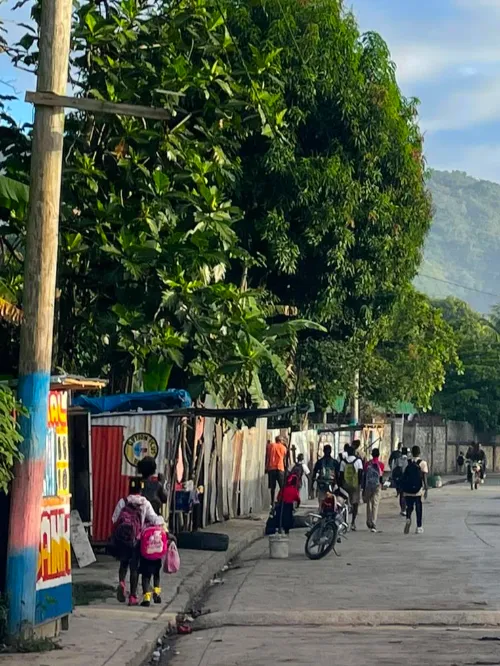
Plaisance-du-Sud is a commune of 27,000 people in the Nippes department of Haiti. The land is rich. The people are hardworking. But the town has been left behind for too long: no reliable electricity, limited clean water, and schools that struggle to stay open.
FDPS Corp was created to change that. We are a Florida nonprofit founded in February 2025 by people who grew up in Plaisance and still carry it with them every day. We raise money from Plaçantins living in the United States and abroad, and we put every dollar to work back home.
This is not charity. This is us investing in our own town. Nobody else is going to do this for us.
Real progress you can see and touch.
There is no electricity in Plaisance-du-Sud. When the sun goes down, the lights go out. Every night, the entire village goes dark. For the 3,000 students spread across 7 schools in the commune, that means no studying after dark. No reading at night. No homework after sundown. Their education stops when daylight ends.
Our first project is changing that. We are installing solar panel lights in key areas of the commune so students can study after dark and families can live with dignity after nightfall. Solar power costs nothing to run once it is in place. It works even when everything else fails.
Think about that for a second. A child in Plaisance has the same desire to learn as any child anywhere in the world. The only difference is that when the sun sets, that child sits in the dark. We can fix that.
We are already working. 36 panels are in the ground and running right now. We need 125 more to finish the job.
More solar panels is needed to power the entire village.
| Cost per solar panel | $150 (purchase, transport, and installation) |
| Panels already installed | 36 |
| Panels still needed | 125 |
| Total panels for the project | 161 |
| Total project cost | $24,150 |
| Students who will benefit | 3,000 |
$18,750 stands between us and a lit-up Plaisance. Every dollar you give goes straight to this project. We will show you exactly where it went.
How Your Money Works
We know what you are thinking. You have seen nonprofits take donations and nothing changes. Here is how we are different.
YOU GIVE
Every donation goes into a project fund. We do not spend money on office space, fancy dinners, or consultant reports. Your dollars go to build a better Plaisance.
WE BUILD
We work with trusted people on the ground to get projects done. Solar panels installed. Water stations built. Classrooms repaired. Real things you can see.
WE SHOW YOU
We report back on every project with photos, numbers, and updates. You will always know what your money built. Transparency is very important today.
Why Plaisance-du-Sud?
There are bigger cities in Haiti. There are places with more attention, more NGOs, more media coverage. That is exactly the point. Nobody else is focusing on Plaisance-du-Sud. Nobody else is going to build what our town needs. So we are doing it ourselves.
Plaisance-du-Sud sits 171 km from Port-au-Prince in the Nippes department. It is surrounded by hills and rich farmland. The locals have always called it the Green Heart of the Nippes. The commune produces coffee, rice, and traditional pottery that have been part of the culture for generations.
This is a place with deep roots. General Nicolas Geffrard, a hero of Haitian independence who signed the Act of 1804, is buried here at Ka Gefra. Haiti's 25th president, Sudre Dartiguenave, was born and buried here at Ka-Sud. The land is fertile. The people are proud. What has been missing is organized investment from the people who know Plaisance best: us.
You Can Get Involved
t does not matter if you live in Miami, Montreal, or Paris. If Plaisance-du-Sud is home to you, you can help build its future. Give what you can. Join our diaspora network. Spread the word. Every bit of it matters.
27,000 Plaçantins are counting on us. Let us show them that the people who left have not forgotten where they come from.